
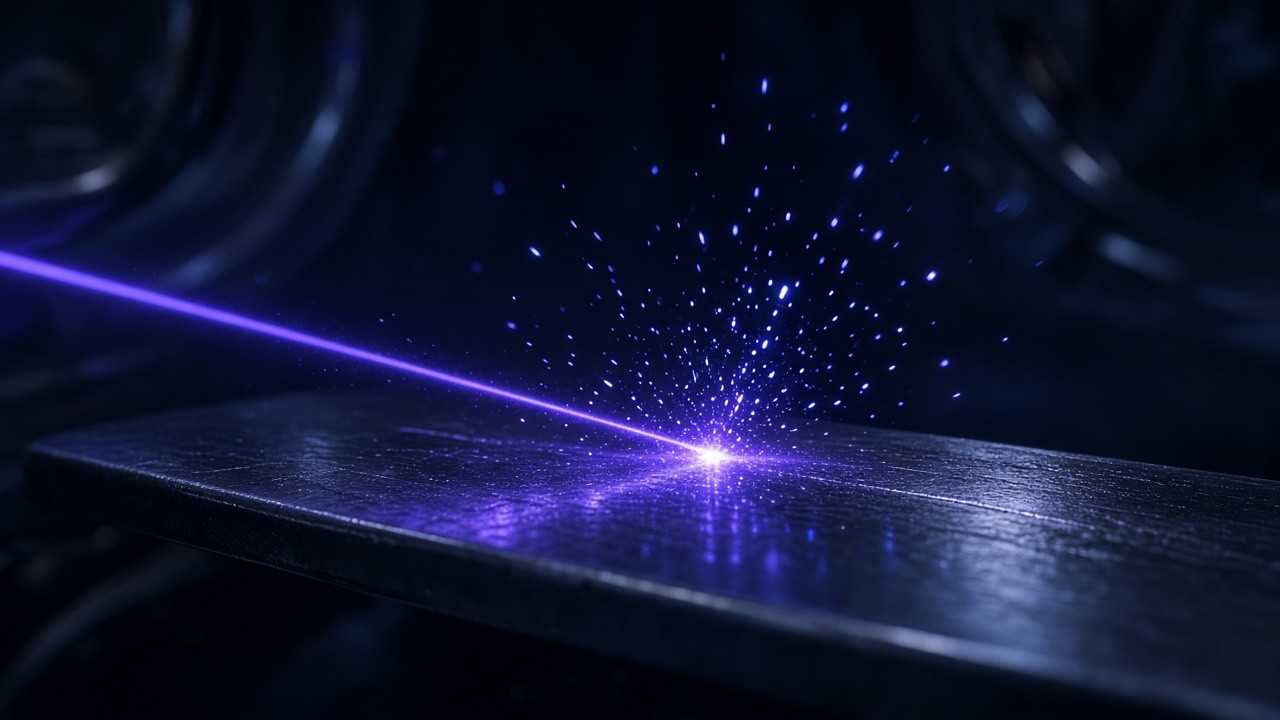
Shine a dim violet light on a clean piece of a metal such as sodium or calcium and electrons fly off it at once. Shine a blinding red light on the same metal and nothing happens, however long you wait. That small puzzle is the photoelectric effect, and working out why it behaves this way pushed physics toward the idea that light comes in packets. It also won Albert Einstein his Nobel Prize, which went to him not for relativity […]
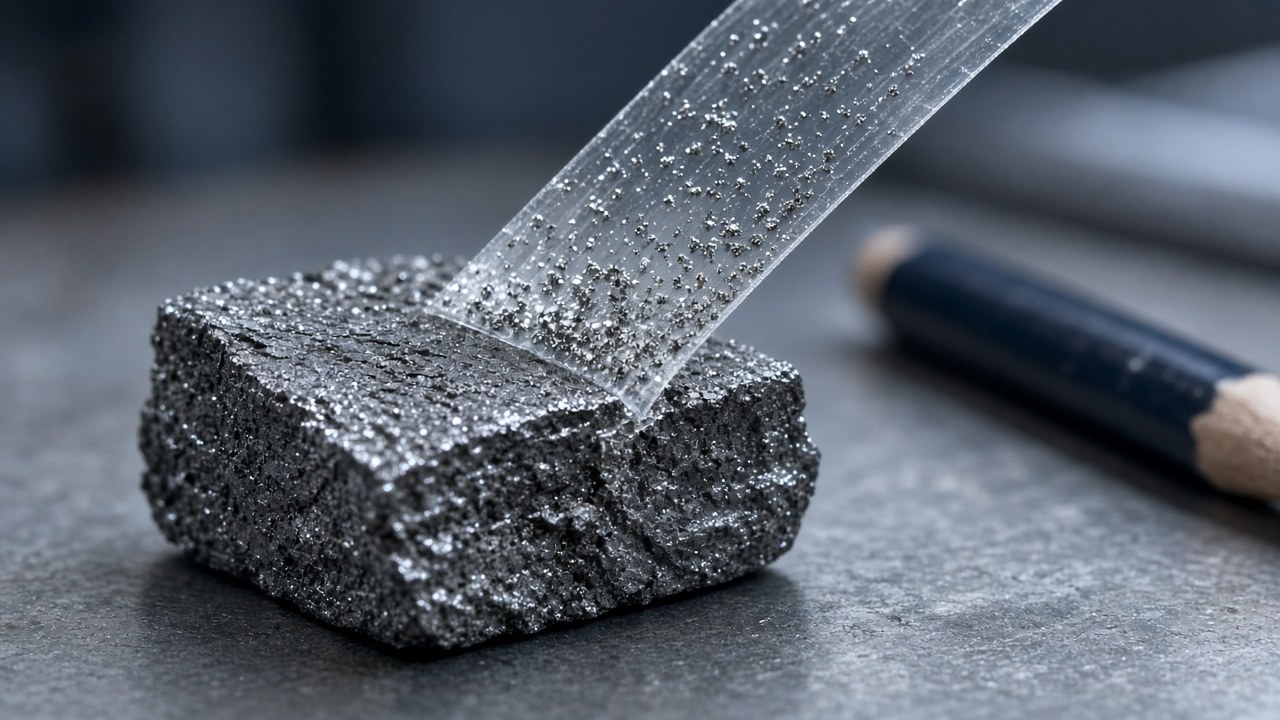
Every time you write with a pencil, you smear thin flakes of graphite across the page, and a few of them may be just one atom thick. That single layer is the answer to what is graphene: a flat sheet of carbon atoms linked in a honeycomb pattern, so thin it is effectively two-dimensional. It was hiding in pencil lead the whole time. In 2004, two physicists in Manchester found a way to pull it out with sticky tape, and […]
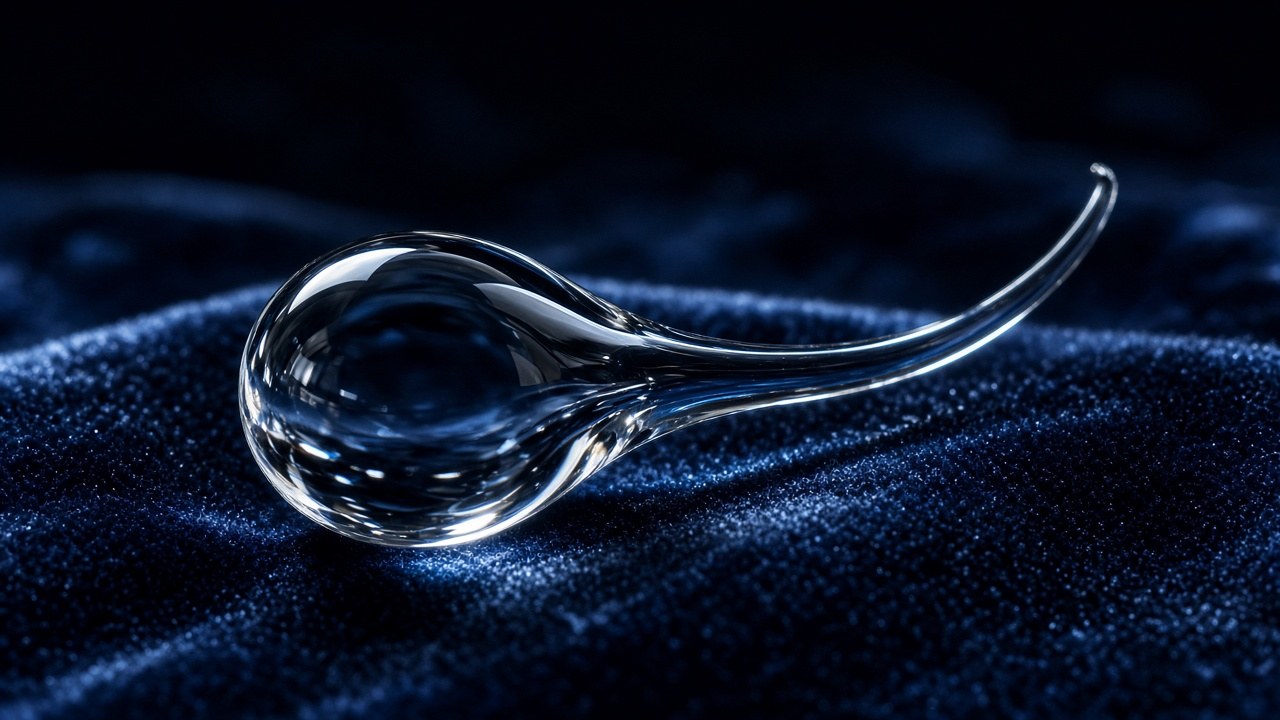
Hit the round end of this glass teardrop with a hammer and it survives. Snap the thin tail with your fingers and the whole thing bursts into powder with a sharp pop. A Prince Rupert’s drop is nothing more than a blob of molten glass dropped into cold water, yet it puzzled 17th-century scientists for decades. Only in the last few decades has anyone measured what’s going on inside. The answer is a lesson in residual stress, the same physics […]
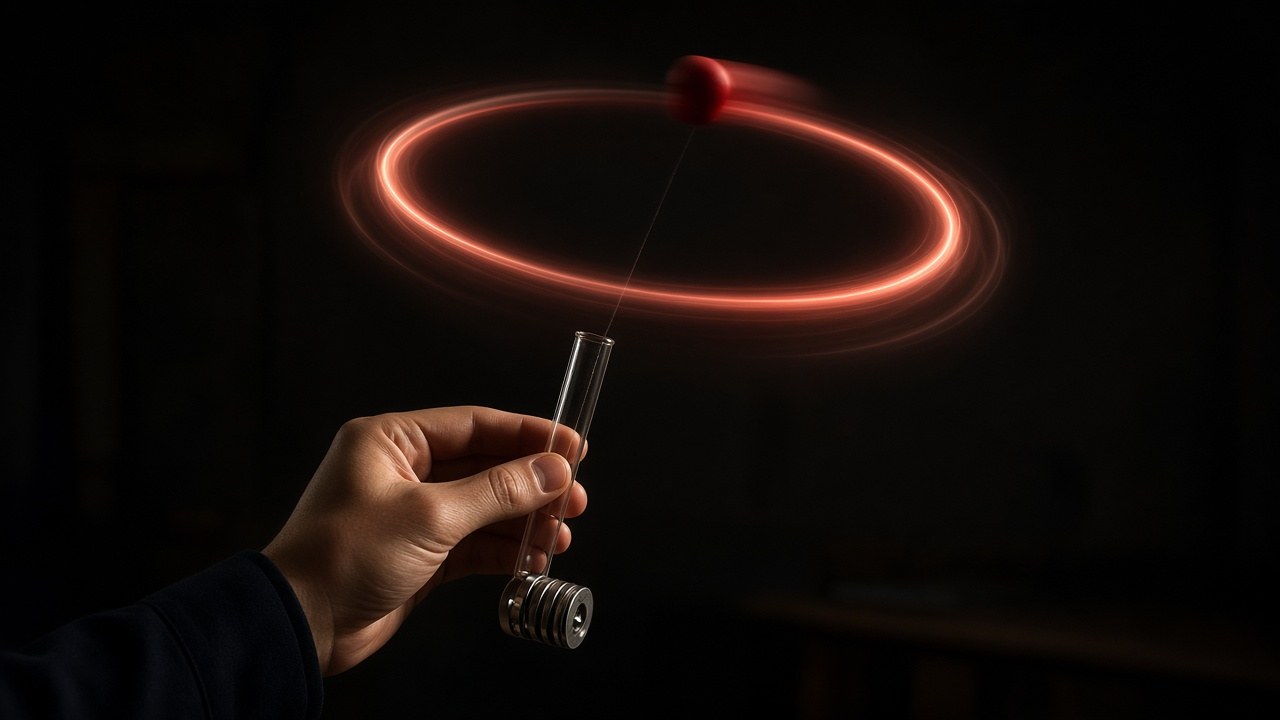
Tie a rubber stopper to a string, whirl it overhead, and you can feel the string pulling on your hand. Spin it faster and the pull grows. The centripetal force experiment turns that feeling into numbers. It measures a mass, a radius and a period, then checks whether the force needed to keep something moving in a circle matches what Newton’s second law predicts. What centripetal force is An object moving in a circle at constant speed is still accelerating, […]
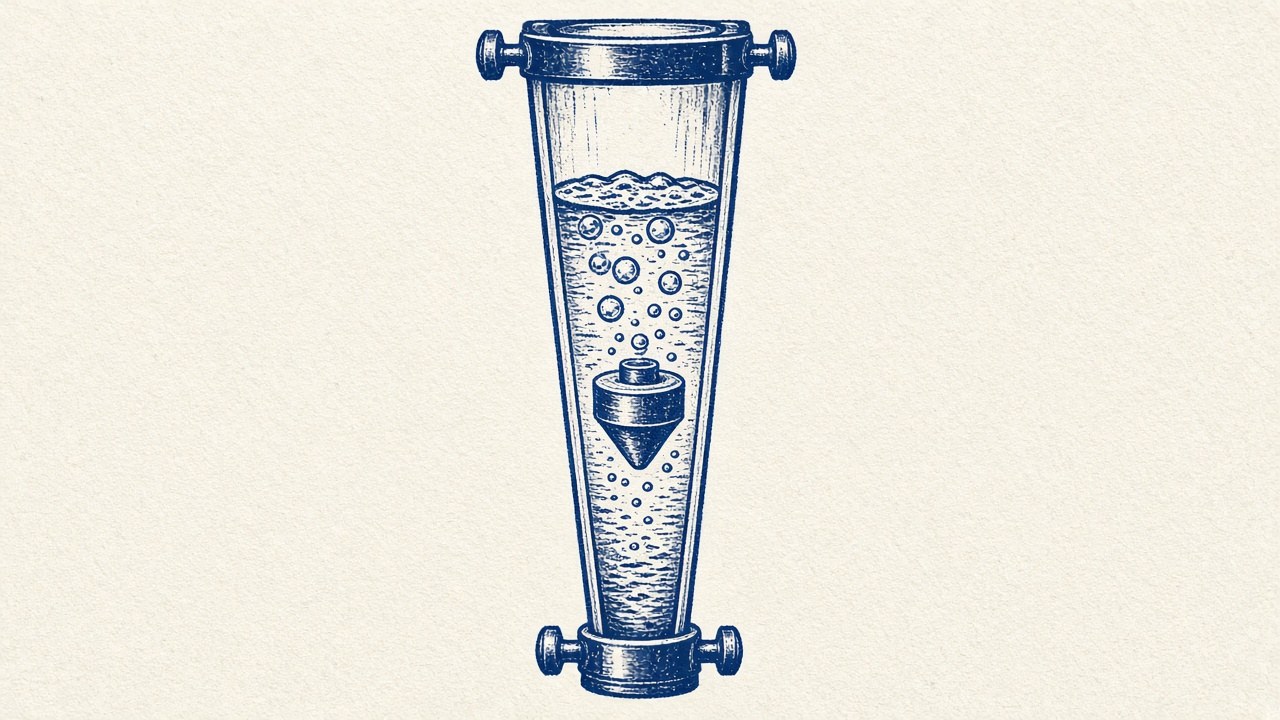
A rotameter is one of the few instruments you can read from across a room: a float hangs in a glass tube, and the higher it sits, the more fluid is flowing. It needs no power and has almost no moving parts. But that simple scale is only correct for one fluid, at one set of conditions, held one particular way. Rotameter calibration is how you find out what the float position really means, and how far you can trust […]

A big drop falling through a cloud ought to sweep up every small droplet in its path. Mostly it doesn’t. The smallest droplets get pushed aside by the air flowing around the falling drop and slip past without touching it. Whether a particle rides the air like that or ploughs straight through it is the question the Stokes number answers. It’s a single dimensionless figure that predicts whether a particle carried by a moving fluid will follow the flow or […]