
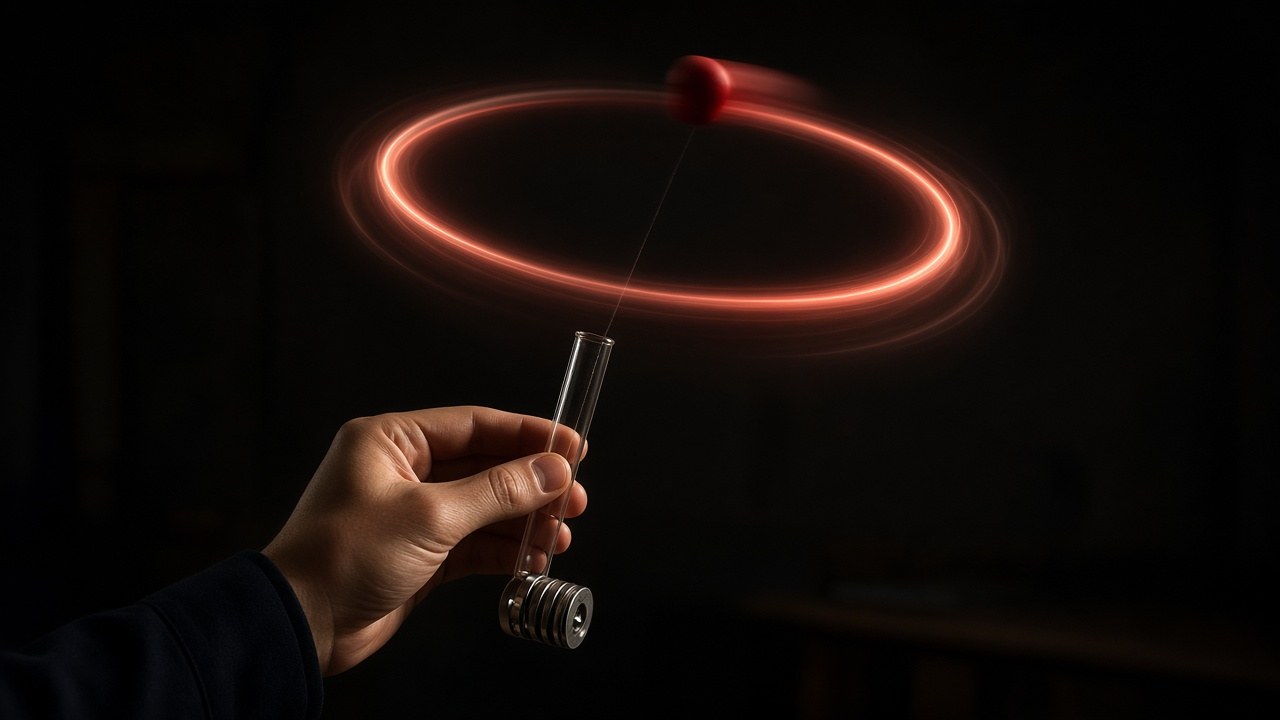
Tie a rubber stopper to a string, whirl it overhead, and you can feel the string pulling on your hand. Spin it faster and the pull grows. The centripetal force experiment turns that feeling into numbers. It measures a mass, a radius and a period, then checks whether the force needed to keep something moving in a circle matches what Newton’s second law predicts. What centripetal force is An object moving in a circle at constant speed is still accelerating, […]
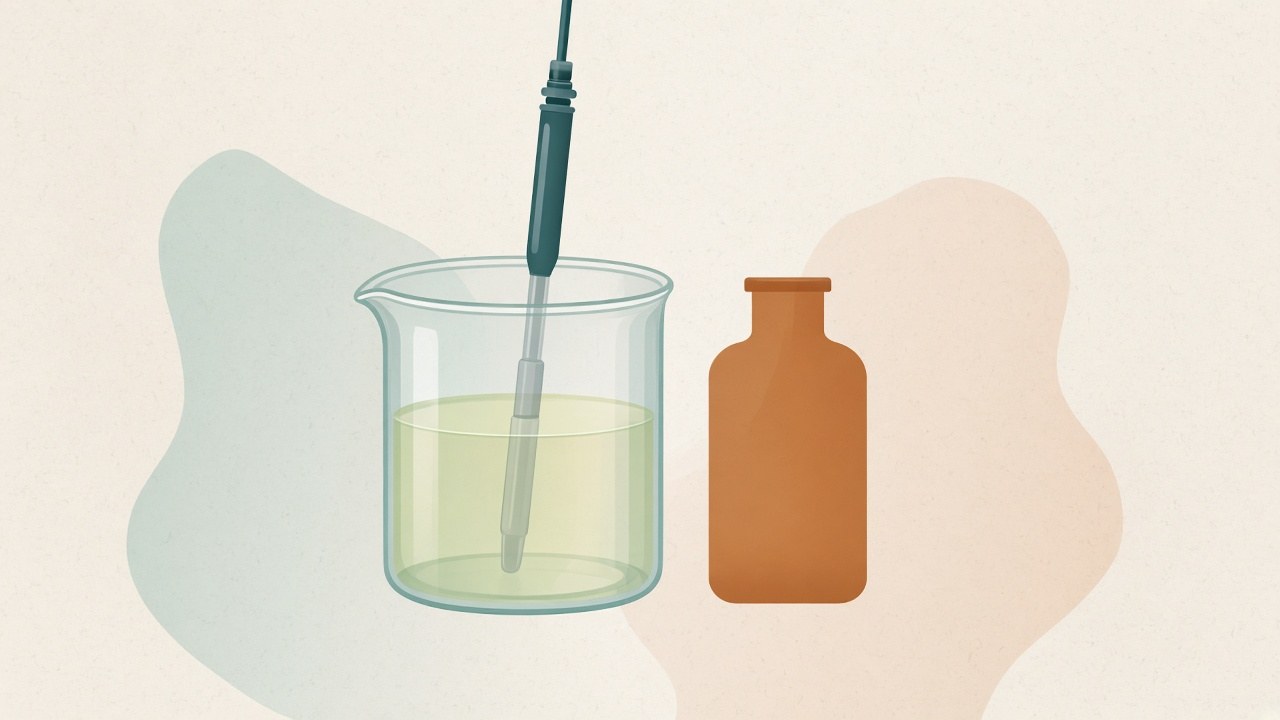
Pour a little vinegar into a beaker, dip in a pH meter, and the reading lands well below 7, but nowhere near the pH of a strong acid at the same strength. The reason is that acetic acid gives up only a small share of its protons. Working out acetic acid pH comes down to one equilibrium constant, a bit of algebra, and knowing when the usual shortcut stops working. Why acetic acid is a weak acid In water, acetic […]
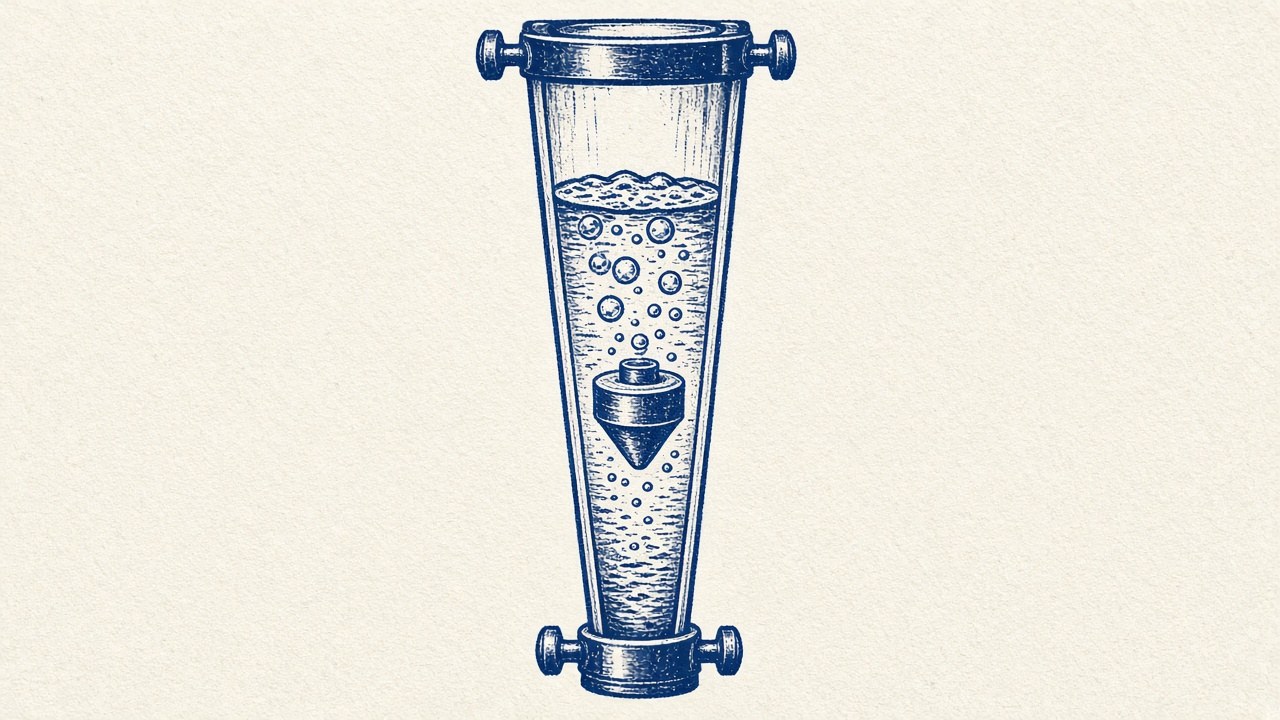
A rotameter is one of the few instruments you can read from across a room: a float hangs in a glass tube, and the higher it sits, the more fluid is flowing. It needs no power and has almost no moving parts. But that simple scale is only correct for one fluid, at one set of conditions, held one particular way. Rotameter calibration is how you find out what the float position really means, and how far you can trust […]
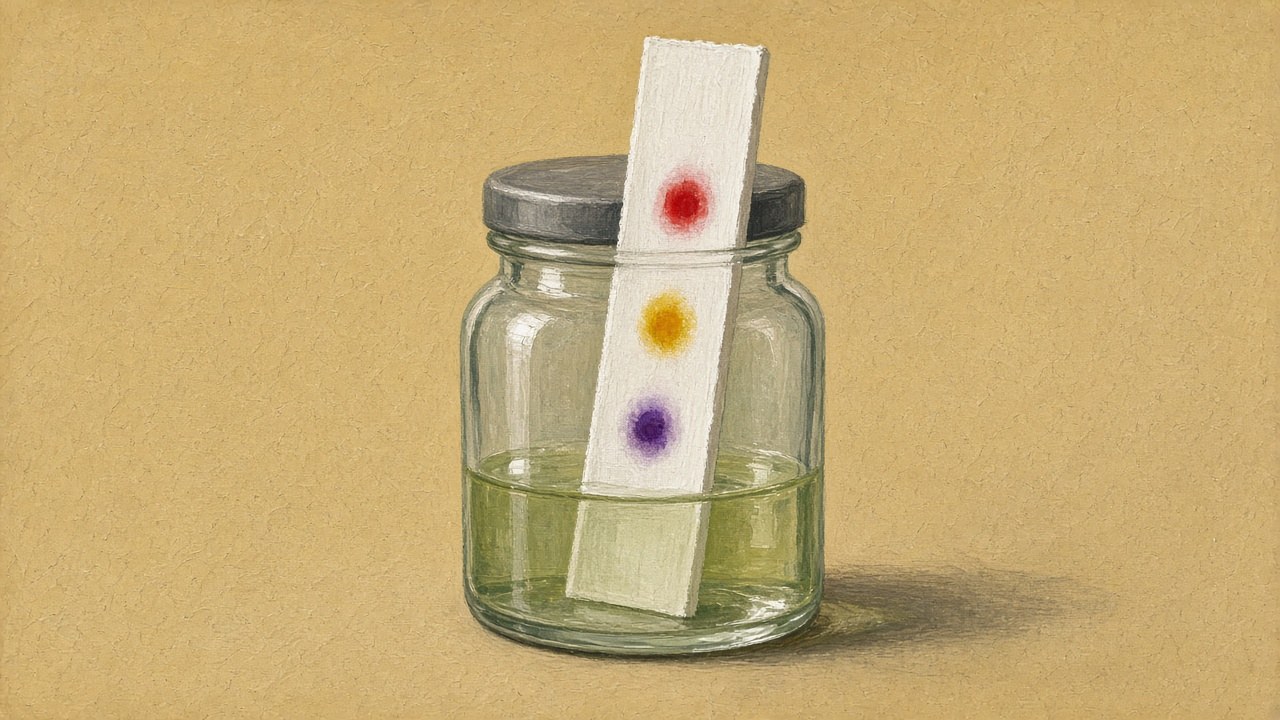
Spot a mixture on a strip of silica, stand it in a little solvent, and within minutes the components have spread out into a ladder of spots. The greasy, nonpolar ones nearly keep pace with the solvent, while the polar ones lag near the start. The reason why nonpolar compounds travel farther in TLC (thin layer chromatography) comes down to a tug-of-war between a polar surface and a much less polar liquid. Once that’s clear, most of the practical rules […]
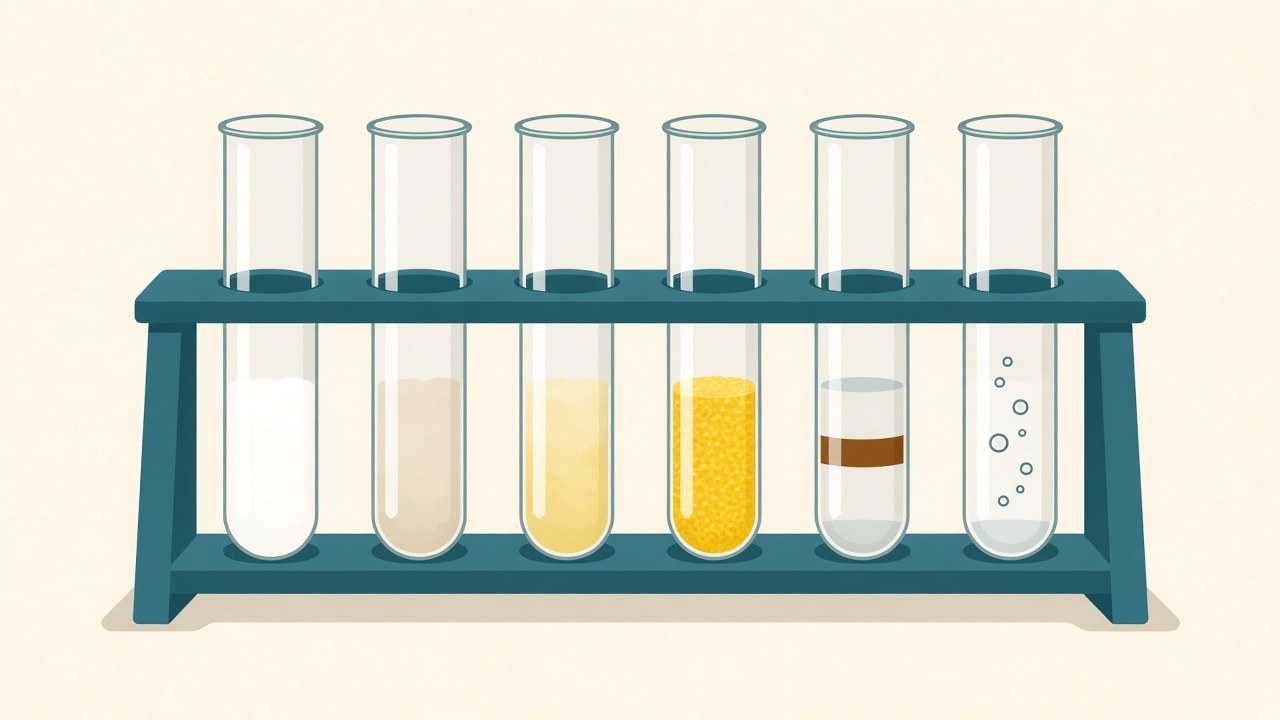
Hand a chemistry student a white powder and ask what’s in it, and half the job is finding the anion: the negatively charged part of the salt. Is it a carbonate, a chloride, a sulfate? Classic anion analysis answers that with a handful of reagents and a careful eye for fizzing, cloudiness and colour. The order of the tests matters almost as much as the tests. The three signals: gas, precipitate, colour Most anion tests rely on one of three […]

Add a drop of pale yellow iron(III) chloride solution to a little salicylic acid in water and the tube turns violet almost at once. Do the same with clean aspirin and the colour barely changes. That contrast is the whole basis of the salicylic acid iron III chloride test, one of the most familiar quick checks in an undergraduate lab. It’s simple to run, but the chemistry behind the colour is worth a closer look, and so are the limits […]